
15 January 2024
The Berg is calling: here’s why you should go

There is magic in the Drakensberg – a grandeur that must be experienced to be understood.
Many of us go on holiday as a form of escape.
Whether it’s the pressures of a stressful job, the hustle and bustle of town, or the simple need to get away for a while.
While there is an element of escapism the Drakensberg offers, this must never overshadow its greatest appeal, which is not escape but rather reconnection with ourselves, our loved ones, and the natural world.
Here are just a few of the ways visitors to this incredible area can establish that connection.

Stretching hundreds of kilometres along the South Africa-Lesotho border, and rising to over 3,400 metres in elevation, the Drakensberg is a hiker’s paradise.
The Little Berg (the belt of sandstone that generally occurs below 2,000m) offers innumerable adventure opportunities for every kind of hiker. Whether you’re on your own, with friends, or taking your kids out for a stroll, the gentle undulations of the Little Berg provide the perfect setting for scenic day hikes without requiring the fitness levels of an elite athlete.
For the more serious mountaineers among us, the High Berg is a playground second to none in South Africa.
The isiZulu name for the Drakensberg is Okahlamba, meaning ‘the barrier of spears’, and nowhere is this name more apt than along the High Berg – the fortress of basalt that towers above the clouds and into the heavens.
Accessible by a handful of picturesque passes and 4×4 tracks, when one stands atop the escarpment, one enters a completely different world from the Little Berg.
On a calm day, the only sound comes from the wind gently whistling through the grass, and the only company is the occasional vulture soaring past.
Beyond its abundant hiking trails, it also has strong appeal to the more vertically inclined adventurer, being a magnet for South Africa’s climbing community (both on rock and ice).
The Drakensberg is one of Africa’s great water towers, supplying 34% of all of Gauteng’s water.
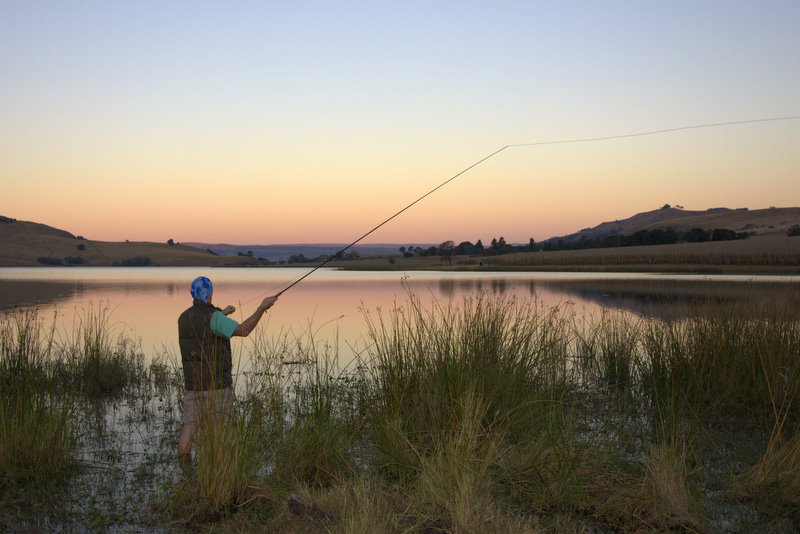
Not only does this abundance of fresh water make it a crucial national resource worthy of protection, but it also makes it a great fishing destination for both the spin- and fly fisherman.
In its flowing streams and still dams, one can aim at catching trout, yellow tail, bass, carp, and barble.
But with views like those in the Berg, catching something is really just an added bonus.

Gentle rides down quiet district roads, the exhilaration of gliding along pristine single track, or the huffing, puffing, and breath-holding of cumbersome climbs and precarious descents.
The beauty of the Berg is that one doesn’t have to choose. The diverse terrain and generally temperate climate year-round make this an extremely attractive riding destination, where one can enjoy all the varied benefits and challenges of mountain biking in a single day.
With something to offer every rider, the Berg is simultaneously the ideal place to start riding, to build confidence, and to put experience and skill to the test at any one of the numerous races held each year, which are just as convivial as they are competitive.

For an altogether different kind of rider, one can swop the bars for a bridle and take advantage of the big skies and open countryside. As with biking, the Berg is the perfect place for both beginners and experienced riders, where one can cross rivers, gallop across the veld, admire the majestic surrounds, and forge a uniquely intimate connection between man and beast.
The horse culture here runs deep, partly because of the relatively late arrival of cars and tarred roads as compared with the rest of the country. That culture persists to the present day, making the rolling hills of the Berg one of the country’s finest locations for adventures on horseback.